Gratuity Explained: Eligibility and How It Is Calculated
Gratuity is a thank-you payment for long service. Here is who gets it and the formula behind the number.
By DocConvertPRO Editorial Team3 min read
When you plan to leave a job after several years, one question matters a lot: how much gratuity will I get? Many employees only discover the answer in the last week. Understanding the basics early helps you plan the timing of your resignation and your finances.
This is general information. Rules, limits and tax treatment change, and your company policy may be more generous than the minimum. Confirm the figures with your HR team.
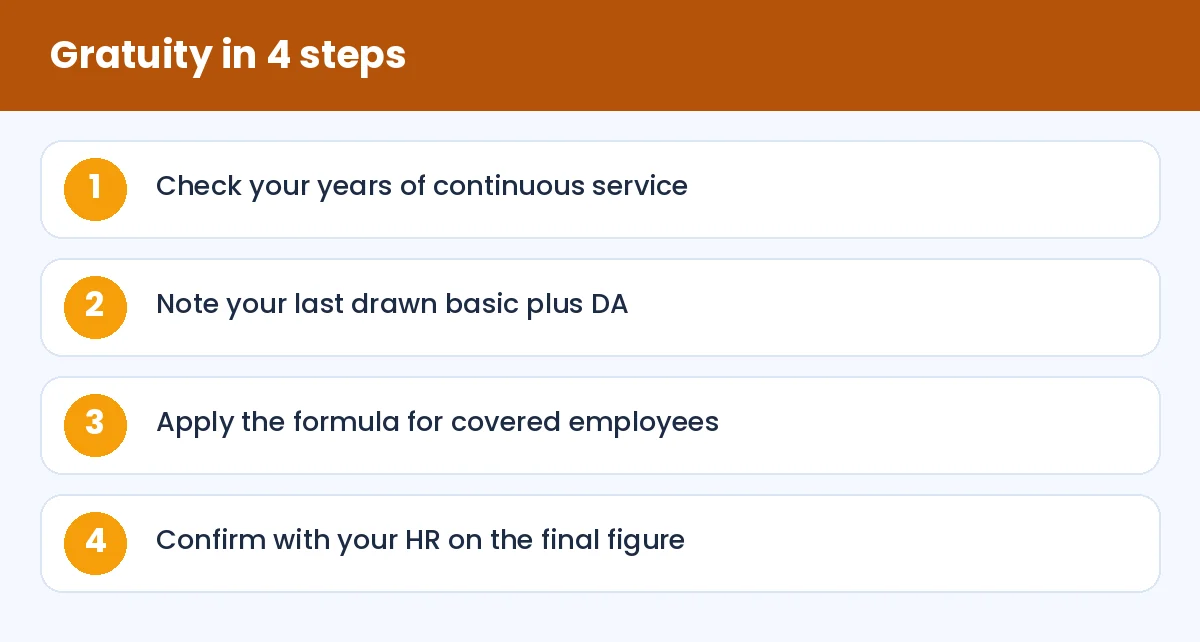
Gratuity Explained: Eligibility and How It Is Calculated: Gratuity in 4 steps (infographic)
What is gratuity?
Gratuity is a lump sum an employer pays to an employee as recognition of long service. For organisations covered by the Payment of Gratuity Act, it is a legal right once the eligibility conditions are met, not a favour.
Who is eligible?
Traditionally, an employee becomes eligible after completing five years of continuous service with the same employer. There are exceptions, for example in the case of death or disablement, where the five-year condition may not apply. Recent labour code changes have also introduced different conditions for certain kinds of employees, so check the latest position with your employer.
The standard formula
For employees covered by the Act, a commonly used formula is:
Gratuity = (last drawn salary × 15 × years of service) ÷ 26
Here "salary" means basic pay plus dearness allowance. The number of years is rounded in a specific way: a part of a year of more than six months is usually counted as a full year.
A worked example
Say your last drawn basic plus DA is ₹50,000 a month and you worked for 8 years.
Try your own numbers in the gratuity calculator. It saves you from arithmetic slips, especially with years and months.
Why timing matters
If you are at four years and ten months, you may be just short of a year-count threshold. Resigning a few weeks later can make a real difference to your payout. Always check the date on which your service years are counted, and consider the notice period in that calculation.
Tax on gratuity
A portion of gratuity received on retirement or resignation is exempt from tax up to a limit under the rules in force, and the rest is taxable. The exact treatment depends on whether the employer is covered by the Act and on current limits. Use the income tax calculator to get a feel for the impact on your total income in the year you receive it.
Gratuity and your final settlement
Gratuity is usually paid in the full-and-final settlement along with unused leave encashment and the last salary. If it is delayed beyond the period the law allows, you may be entitled to interest, but start with a polite written request to HR and keep a copy.
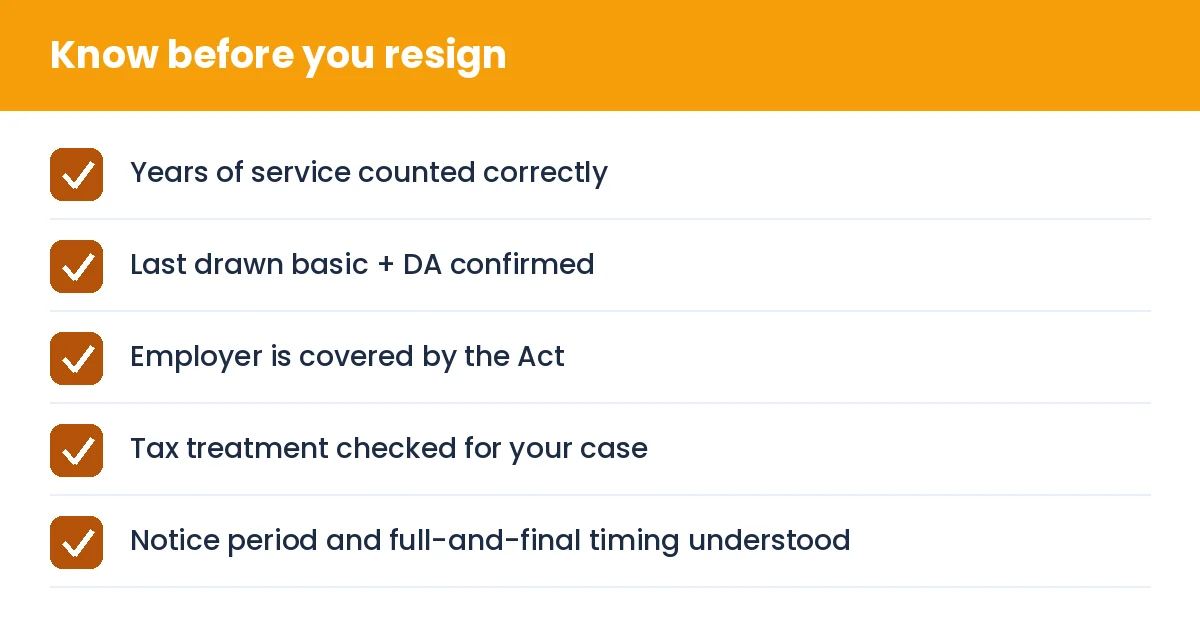
Gratuity Explained: Eligibility and How It Is Calculated: Know before you resign (checklist)
Summary
Five years is the traditional threshold, the formula uses last drawn basic plus DA, and timing can change the number. Check your company's policy, calculate early and plan the date of your resignation with this in mind.