BMI is a quick screening number, not a verdict on your health. Here is how to read it without panic or false comfort.
By DocConvertPRO Editorial Team3 min read
Body Mass Index, or BMI, is one of the most widely used health numbers. It is easy to calculate, which is exactly why it is so often misunderstood. Used sensibly, it is a helpful starting point. Used as a final judgement, it can mislead you in either direction.
This article is general information and not medical advice. Talk to a qualified doctor about your health.
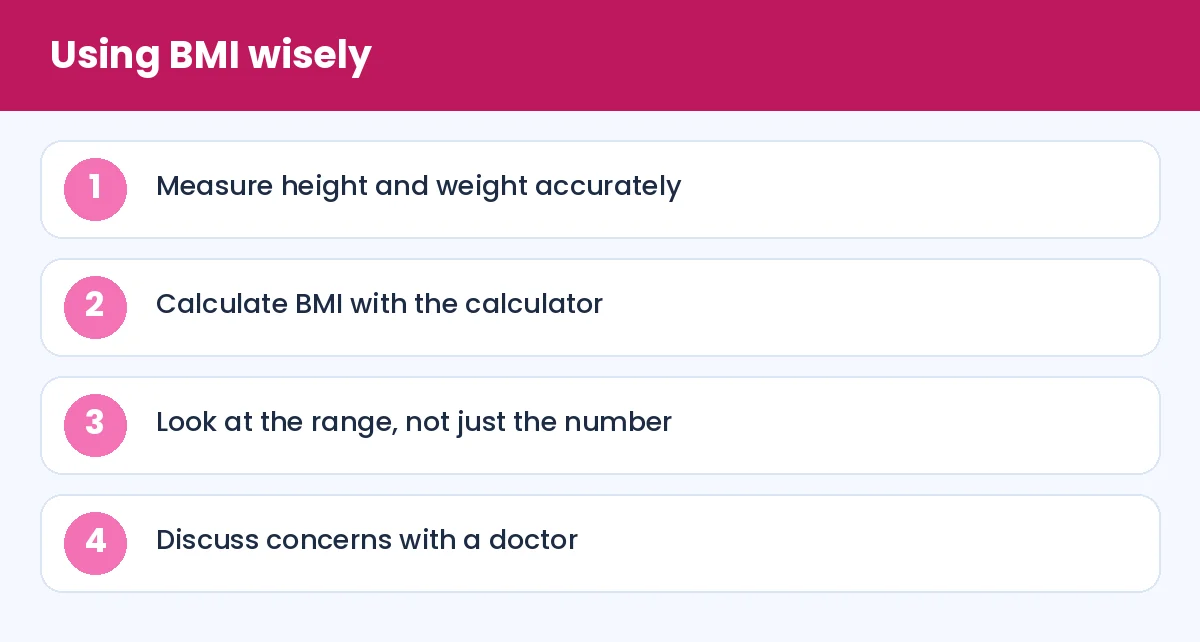
How to Use BMI and Health Calculators Sensibly: Using BMI wisely (infographic)
What BMI is
BMI is your weight in kilograms divided by the square of your height in metres. A person who weighs 70 kg and is 1.75 m tall has a BMI of 70 ÷ (1.75 × 1.75) = about 22.9. You can calculate yours with the BMI calculator.
Health organisations group BMI into ranges such as underweight, normal, overweight and obese. Some Asian populations are advised to use lower cut-offs, because health risks can rise at lower BMI values than in other groups.
What BMI does not tell you
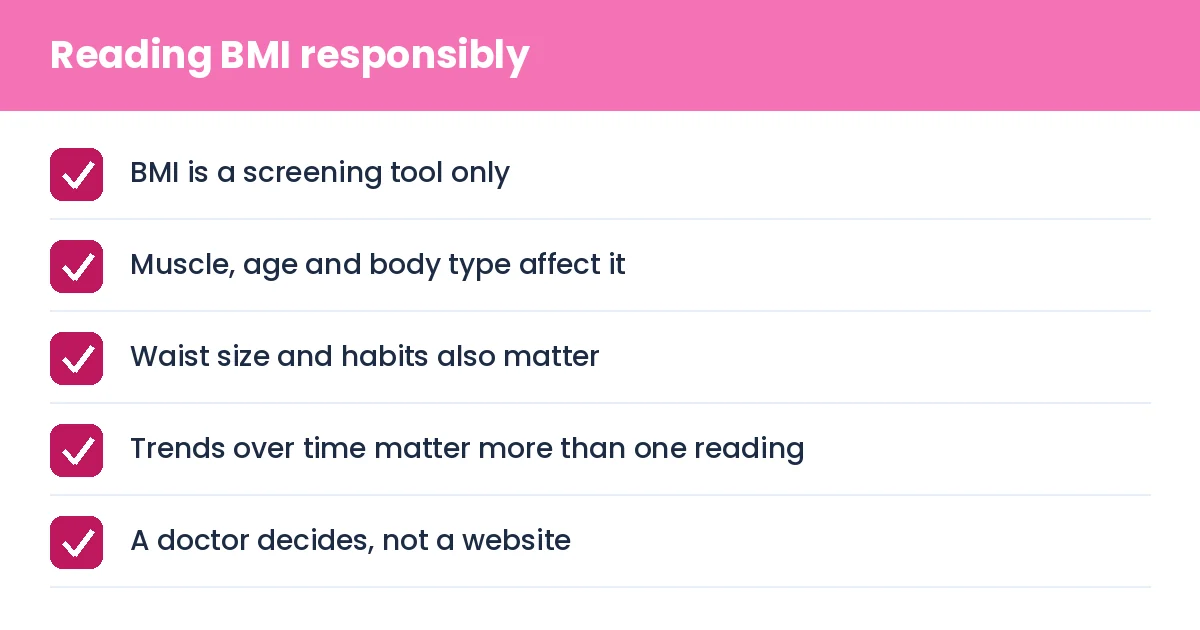
Muscle versus fat. A muscular athlete can have a high BMI without excess fat.
Where fat is stored. Fat around the waist carries more risk than fat on the hips.
Age and sex. Body composition changes with age, and women and men differ.
Fitness and habits. Diet, activity, sleep and blood tests say much more about health.
How to use it well
Treat BMI as a screening tool. If it falls well outside the normal range, it is a reason to look deeper, not a reason to panic. Measure your waist as well, track changes over months instead of days and pay attention to how you feel and how your energy and stamina are.
Take accurate measurements
Weigh yourself in the morning, before eating, wearing light clothes. Measure height without shoes against a flat wall. Small errors in height change the result noticeably.
Related calculators
You may find the percentage calculator useful for tracking weight change over time, and the age calculator for exact age in years and months, which matters for children's growth charts and some medical forms. Children and teenagers are assessed on special growth charts, not the adult ranges.
Avoid unhealthy extremes
Aiming for a number on a scale can lead to crash diets or over-exercising. If you feel worried about food, weight or body image, speak to a doctor or a qualified counsellor. Sustainable habits such as regular movement, balanced meals and enough sleep work better than quick fixes.
When to see a doctor
See a doctor if you have unexplained weight loss or gain, constant tiredness, breathlessness, or a family history of diabetes or heart disease. A professional can order the right tests and give advice that fits you.
How to Use BMI and Health Calculators Sensibly: Reading BMI responsibly (checklist)
Summary
BMI is a simple signal. Use it as one input among many, and let a qualified professional interpret what it means for you.